The Myth of the One Perfect Ball
The one perfect ball is a myth: match a ball’s surface, shape, and intended use to the sport and setting for a more comfortable, readable game.
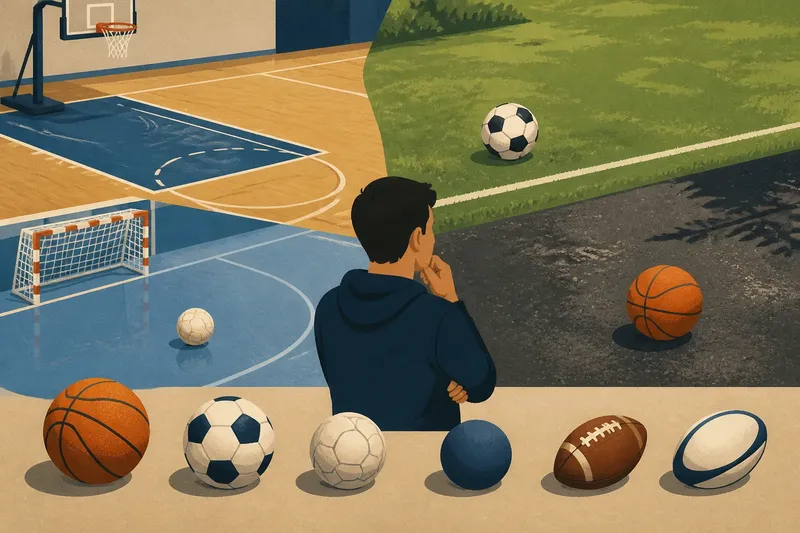
Which ball should you choose when the options look almost alike? The one perfect ball is a myth: a ball that feels right for a polished court may behave poorly on grass, while one made for a soft touch may not suit a forceful kick. Start with the game you want to play, then match the ball’s surface, shape, and intended use to that setting.
Choose by playing surface
The ground beneath the ball affects how it rolls, bounces, and grips. A smooth indoor floor gives a ball a predictable path; rough pavement can scuff a cover and make its bounce less consistent. Grass, sand, and artificial turf each bring their own friction and unevenness.
If you play on a hard indoor court, look for a ball intended for that sport and surface. A basketball’s pebbled cover, for instance, helps the hand hold it during dribbling and passing. A soccer ball designed for outdoor use may feel too firm or lively for a small indoor court, where a lower-bounce futsal ball is often the better fit.
For a driveway or playground, durability may matter more than a refined touch. An outdoor basketball with a tougher rubber cover is made for abrasive ground; a softer indoor-style cover can wear quickly there. On grass, a soccer ball’s panel construction and surface finish should suit outdoor play, where moisture and turf can alter how it moves.
Choose for the ground you actually have, not the surface you hope to use later.
Match shape to sport
Round balls invite rolling, bouncing, and kicks in many directions, but their size, weight, and construction still vary by sport. A basketball needs to rebound from the floor and sit securely in a player’s hands. A soccer ball is shaped for foot control, heading, and flight. Neither is a sensible substitute for the other just because both are round.
Oval balls answer a different set of demands. In rugby and American football, the shape supports carrying, passing, and distinctive bounces, though the rules and ball specifications differ between those sports. If you are buying for a particular game, choose the ball named for that game rather than relying on a broad label such as “football.”
Smaller or softer balls can also make sense for introductory play, but only when they are intended for the activity. A foam ball may be easier to handle in a casual indoor game, yet it will not reproduce the flight or bounce of a regulation ball. That difference is useful if comfort and low-impact practice matter; it is limiting if you are learning the feel of the official game.
Decide by setting
Use these situations to narrow the choice:
- Organized match: Choose the sport’s match ball in the appropriate size and construction. Its feel and flight are intended to suit the game’s rules.
- Casual outdoor play: Favor a durable cover designed for the surface, especially on pavement or rough playground ground.
- Indoor practice: Pick a ball made for the court and activity; a lower-bounce option can help in tight spaces when that format calls for it.
- Young or new players: Consider an age-appropriate size or a softer practice ball. A ball that is easier to control can make early play more comfortable.
- Mixed-use recreation: Decide which sport and surface will get the most use. A ball built for that main purpose is a better compromise than an unspecified “all-sports” ball.
- Skill-specific practice: Select the ball used in the skill’s real setting. A training ball can help with a narrow goal, but it may feel different from a match ball.
Say you want one soccer ball for weekend play on a neighborhood field and an occasional indoor session. If outdoor play is the priority, choose a ball suited to grass and accept that it may not behave like a futsal ball on a court. If the indoor game is the main activity, choose for that surface instead of expecting one design to deliver both experiences.
Read the ball’s purpose
Labels such as “match,” “training,” “recreational,” and “indoor” describe intended use, not a simple ranking from best to worst. A match ball is designed around formal play; a training ball may emphasize durability through repeated practice; a recreational ball can prioritize accessible handling or broad casual use. The right label depends on what you plan to do with it.
Also look at the size category, construction, and surface description. A stitched or bonded soccer ball can differ in feel and water handling, while basketball covers are commonly marked for indoor, outdoor, or mixed use. For sports with formal equipment rules, follow the competition’s specifications and the maker’s care guidance.
When possible, handle the ball before buying. Notice whether its texture feels secure, whether its weight seems manageable, and whether its surface suits the place you will use it. A label narrows the choice; your hands and playing surface help finish it.
Questions players ask?
Can one ball work indoors and outdoors?
Some balls are made for mixed use, but their cover and bounce may be a compromise. If one surface dominates your playing time, choose a ball intended for that surface.
Does a softer ball suit beginners?
It can make handling more comfortable, especially in casual practice, but softness does not replace choosing the right size and sport. For learning match skills, use a ball close to the one used in the game.
Is a training ball less suitable than a match ball?
Not necessarily: the two serve different purposes. A training ball may be a practical choice for regular drills, while a match ball is the closer fit for formal play and its expected feel.
What matters more, brand or surface?
Start with the sport, surface, and intended use; then compare construction and feel among suitable options. A familiar brand name cannot make an indoor ball suitable for rough outdoor ground.
Make the final choice
For a useful decision, name the sport, the surface, and the kind of play first. Then check the ball’s intended use and whether its size and feel suit the players. That sequence keeps the choice grounded in what the ball needs to do rather than the promise of a universal design.
The one perfect ball is not waiting on a shelf; the suitable ball is the one built for your game and ground. If you play several sports, keep separate balls where their demands clearly differ, and store each according to its care instructions so its surface remains suited to the job.